Two different ways to keep ashes close
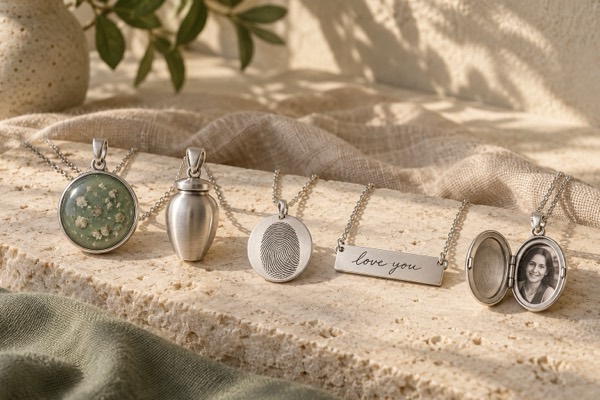
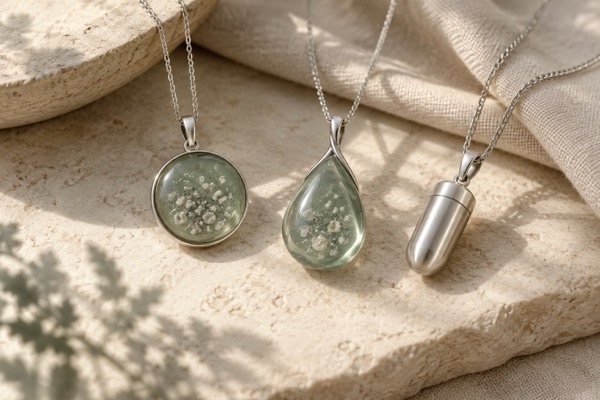
In an incorporated design, a maker combines ashes with a material such as resin or glass. A compartment design holds ashes inside a small hollow space. These are different arrangements: an urn pendant may be filled after manufacture, while an incorporated feature is made around the supplied material.
Necklaces or another jewellery style
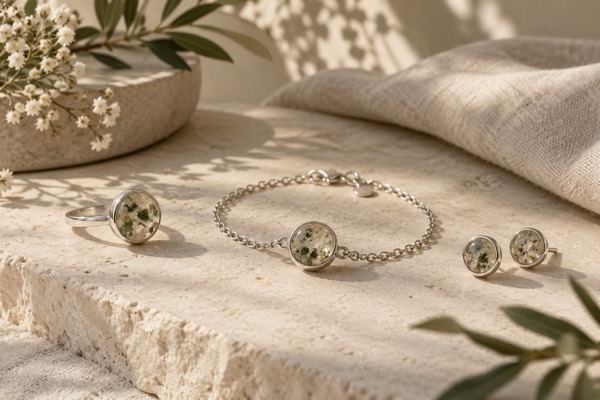
A necklace offers a pendant surface and a choice of chain length. Rings bring the keepsake into frequent contact with your hands; bracelets move at the wrist; earrings introduce weight and fitting considerations. Start with a format you already find comfortable, then look at how that design contains the ashes.
What you want to see and feel
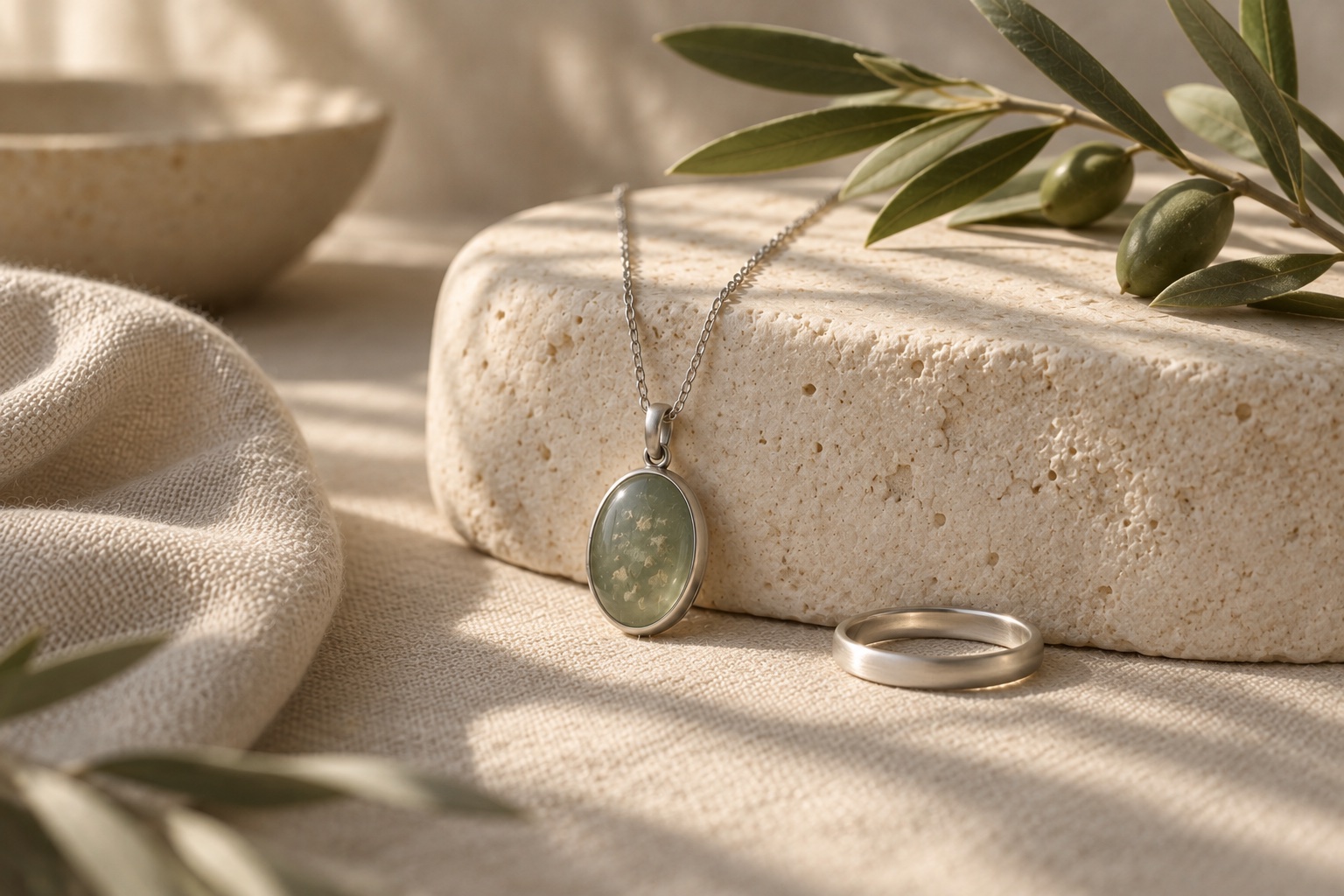
Some people want the ashes to form a visible part of the design. Others prefer a discreet setting or a closed pendant. Colour, opacity and the maker’s technique all affect the appearance. Ask to see examples of the particular method, remembering that an example cannot promise an identical inclusion pattern.
What to establish with a maker
Before committing, establish how much the maker requests, how your material is identified and what happens to anything unused. Ask who fills or seals the piece and what its care instructions cover. These answers should relate to the specific design, rather than to ashes jewellery in general.
Take the next step when ready
Choose the format first, then ask about the method and preparation. If you are remembering a pet, check the cremation arrangements before assuming ashes will be returned. If handling or sending ashes does not feel right, a personal print or symbolic keepsake offers another way to preserve the connection.
Questions you might have
Are ashes visible in the finished jewellery?
Sometimes. Resin or glass designs may show inclusions, while opaque settings and compartments can keep them out of sight. Ask about the exact design.
Do all designs require sending ashes away?
No. Some compartment pendants can be filled by the owner or with assistance. Incorporated designs usually require the maker to receive the material.
Can relatives choose different keepsakes from the same ashes?
It may be possible, depending on the available ashes and each maker’s requirements. Agree the arrangements together and confirm quantities before separating anything.
Further reading and source guidance
- EverWith: how its resin jewellery is made ↗
An example of one maker’s incorporation process, rather than a universal specification.
- Ashes into Glass: its creation process ↗
An example of incorporated-glass making; confirm your chosen maker’s process.
Source guidance reviewed 10 October 2026.