What the keepsake represents
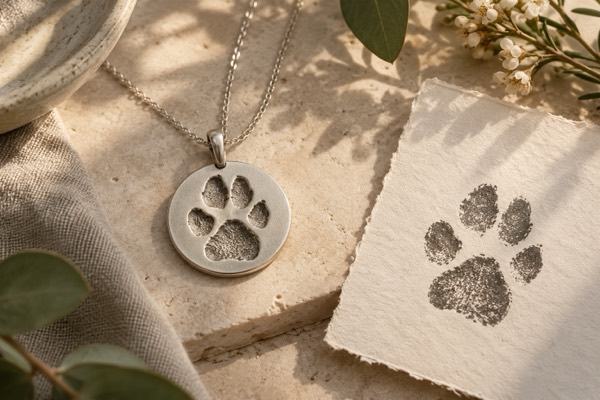
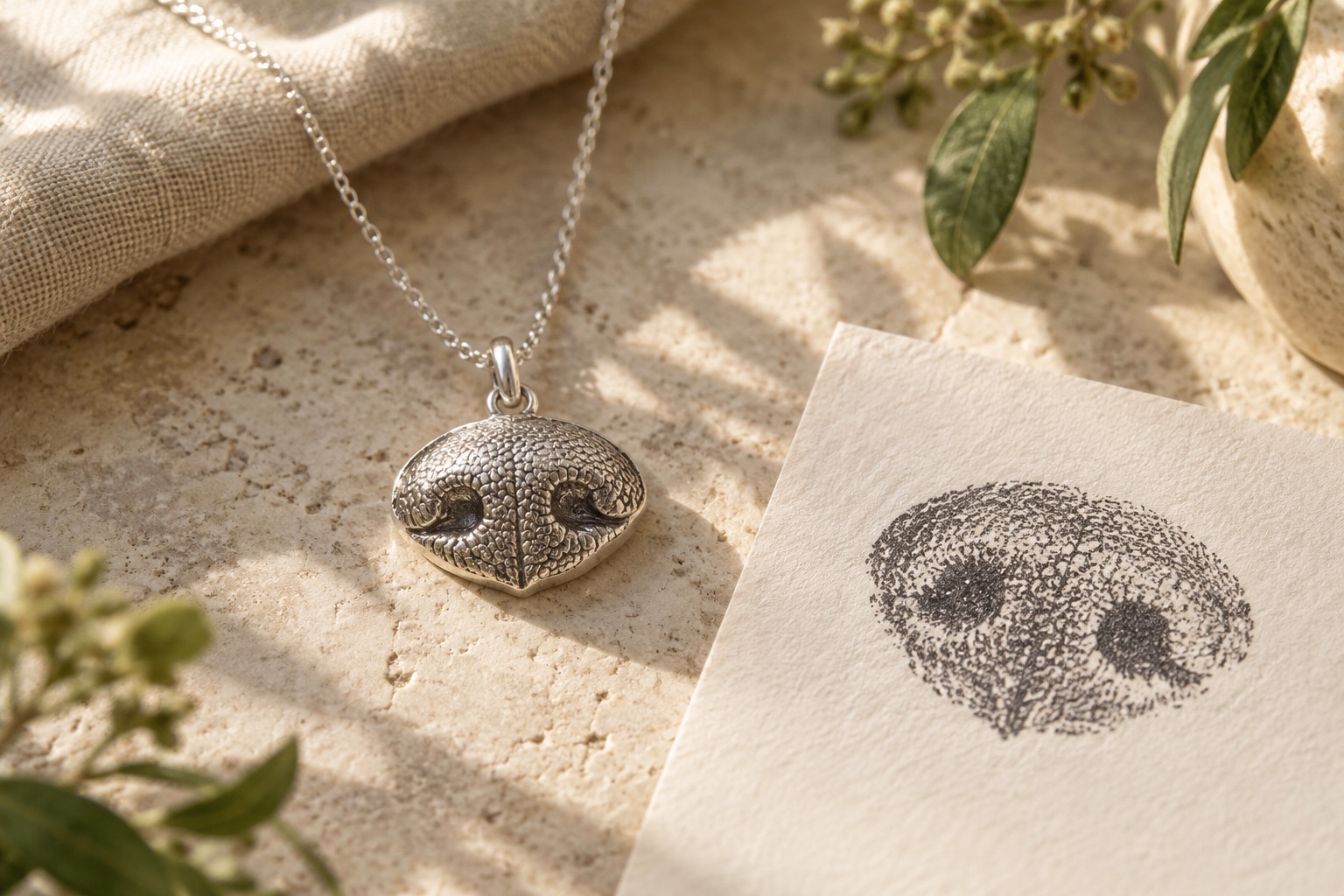
The intended connection is a recorded surface pattern from your companion, not simply a stock nose shape. Ask what the maker reproduces and how it appears on the finished jewellery. A textured source and a photograph may support different techniques, so the distinction matters.
Suitability before capture
Ask the maker which sources their method accepts before collecting a print. For any new capture, seek veterinary advice if there is uncertainty about the animal’s comfort or suitability. There is no single capture method that should be assumed appropriate for every species or situation.
Assess existing impressions
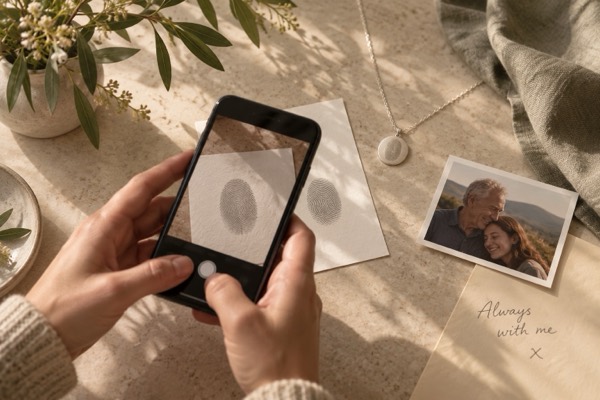
If you already have an impression, keep it safe and ask whether a clear photograph can be assessed first. Fine texture may be difficult to reproduce from an unclear image. Do not try to improve it by inventing lines or altering the physical record before the maker has reviewed it.
Detail and proof approval
Discuss how the texture will be scaled and what detail is likely to remain visible. A proof may show the layout without fully predicting the tactile result, so ask which aspects it represents. Avoid expecting a perfect copy when the source or process has limits.
Questions you might have
Is capture suitable for my pet?
Ask a vet or appropriate professional where there are welfare or species concerns, and check the maker’s requirements first. Do not assume a universal technique.
Can an existing impression be assessed?
Yes, ask what images or records are needed for initial assessment. Keep the original intact until there is an agreed reason to handle or send it.
What if fine texture cannot reproduce clearly?
Discuss a simpler representation or a different source. A keepsake should not be presented as an accurate individual print if its details have been invented.
Further reading and source guidance
- Hand on Heart: print and artwork preparation ↗
An example of a maker accepting digital source copies for assessment.
Source guidance reviewed 10 October 2026.