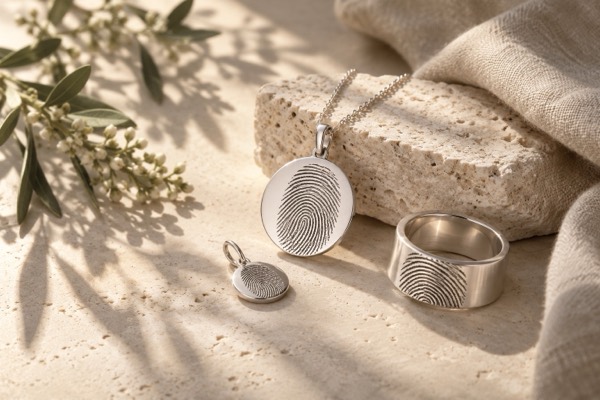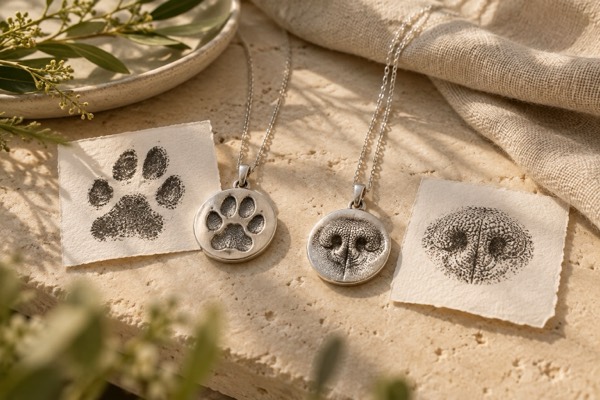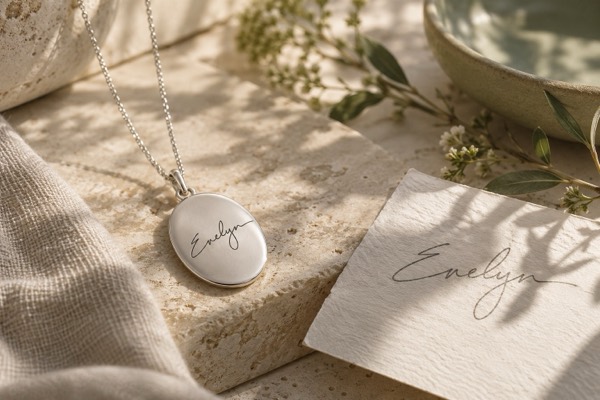
If the chance to capture a mark may be limited
If a human or pet print has not been recorded and access may soon be limited, contact the relevant care, funeral or veterinary professional promptly. Ask what is possible and appropriate. Capturing a source can be considered before choosing jewellery, but availability should never be assumed or promised.
Start with the maker’s source requirements
Ask the maker which inputs their technique accepts. A photograph, scan, ink print and physical impression are not interchangeable for every process. Describe what you already have and request an assessment before buying a kit, attempting a new capture or posting a precious original.
Protect originals and personal information
Keep original cards, letters and impressions secure. Make a backup copy and share only the relevant details where possible. A signature on a private document may be assessable from a cropped image, without sending unrelated information. Ask how the maker handles and retains the files you provide.
Submit a clear source for assessment
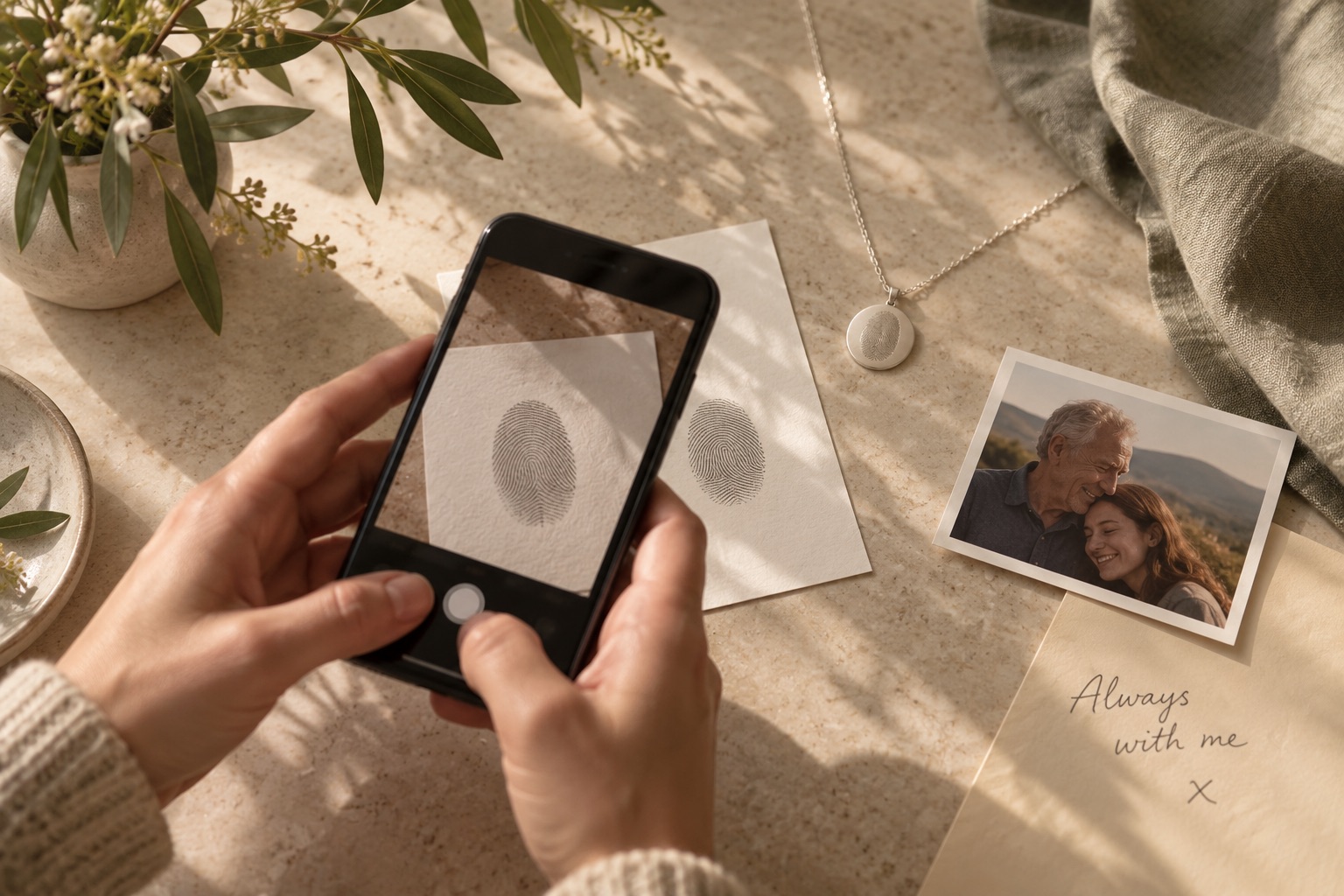
For an initial image, show the complete chosen detail clearly, with even light and without shadows or glare. Use the best source file available rather than a small screenshot. Let the maker specify any technical requirements and explain whether cropping or contrast changes are suitable for their method.
If no usable source can be obtained
An incomplete source may support a faithful partial design, but invented detail should not be presented as an authentic record. Ask what any clean-up or reconstruction changes. If no usable source exists, a name, photograph or symbol offers another route without recreating a print that was never captured.
Questions you might have
Can an old scan or photograph be used?
It may be usable if it contains enough detail for the method. Request assessment before assuming that an old source is unsuitable or guaranteed to work.
What if no print was taken before the person died?
Ask the relevant aftercare professional what, if anything, is still possible. If no authentic record is available, consider handwriting, photographs or symbolism instead.
Should I send the original card or letter?
Begin by asking whether a copy can be assessed. Send an irreplaceable original only where there is a clear need and an agreed handling arrangement.
Can a maker recreate missing detail?
They may offer an interpretation, but it should be identified as such and approved. Reconstructed details should not be presented as an unchanged personal record.
Further reading and source guidance
- Hand on Heart: print and artwork preparation ↗
An example of a maker accepting digital source copies for assessment.
Source guidance reviewed 10 October 2026.