
Check which ashes will be available
Ask the cremation provider to explain the service and return arrangements in plain language. Under the APPCC consumer code, individual cremation means one pet in the chamber, while communal cremation involves mixed ashes that are not returned to owners. Confirm your own provider’s arrangements rather than relying on a label alone.
Choose a wearable format
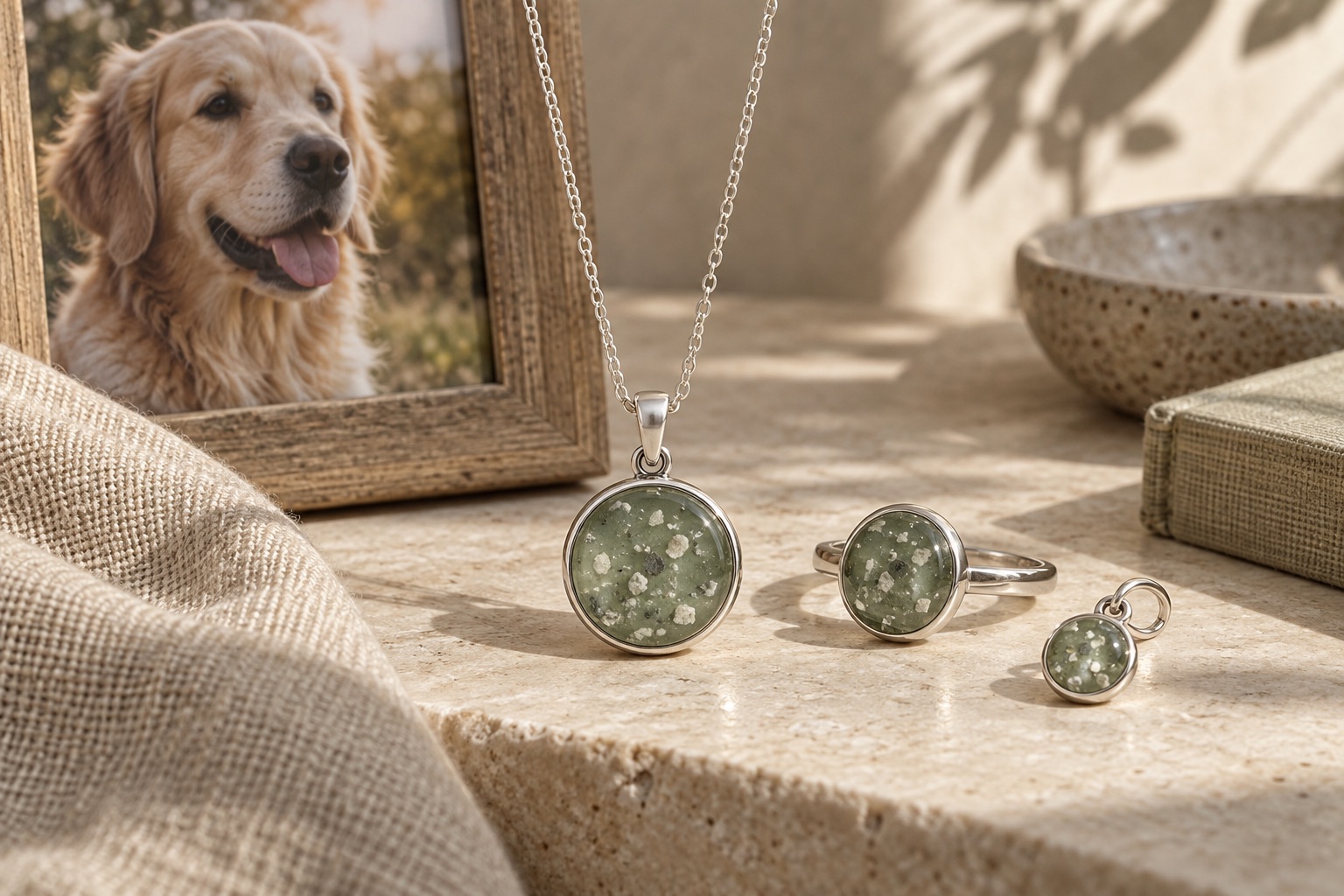
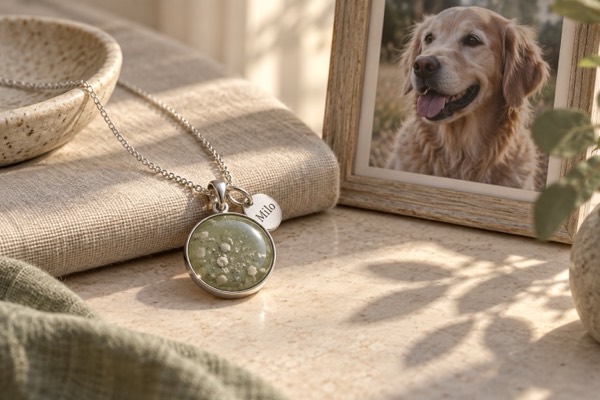
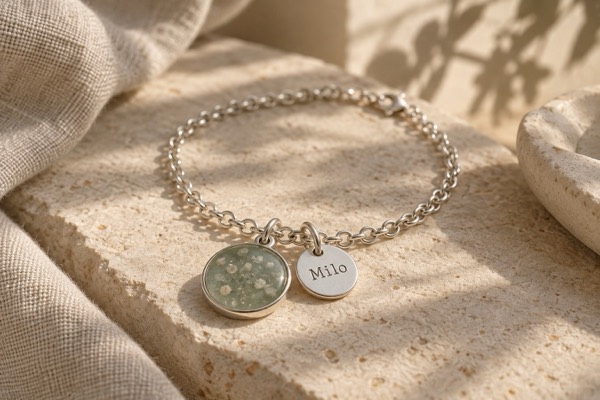
A necklace can keep the memorial at your chest. A ring makes it part of something you see on your hand. A charm can join compatible jewellery you already wear. Think about fit, fastening and everyday contact before deciding which format feels most natural.
Inclusions or compartments
The ashes may be incorporated into a feature or enclosed within a chamber, depending on the design. That distinction affects whether you send material away, who fills the piece and what care it needs. Ask the maker to identify the method rather than assuming all pet ashes jewellery works alike.
Plan handling with the maker
Get written instructions for quantity, packaging and identification before separating material. Ask how the source is tracked, whether different pets are kept clearly identified and what happens to unused ashes. You may wish to keep most ashes elsewhere; confirm the maker’s actual requirement first.
Questions you might have
Do all pet cremation arrangements return ashes?
No. Arrangements differ, and communal services may not return individual ashes. Ask the provider exactly what the selected service includes before planning a keepsake.
Can most ashes remain elsewhere?
Often only a portion is requested, but the quantity varies. Obtain the maker’s instructions before deciding what to separate.
Can several family members commission keepsakes?
It may be possible if sufficient material is available. Agree the family’s wishes and each maker’s requirements before arranging separate commissions.
Further reading and source guidance
- APPCC: consumer code of conduct ↗
Definitions under this association’s code; confirm your provider’s actual arrangements.
Source guidance reviewed 10 October 2026.