Describe the memory before the design
Describe the connection in a few sentences: a particular phrase, shape, colour or combination of details. Then explain how you would like to wear it. This gives the maker both the personal intention and the practical context without requiring you to solve the design yourself.
Choose essential and optional features
Identify the one or two elements that are essential. Other features can remain preferences while feasibility is explored. Combining ashes, handwriting and stones may be possible in some designs, but space and methods impose limits. If adapting an heirloom, ask for assessment before any irreversible alteration.
Agree materials budget and practical requirements
Set out a comfortable budget and disclose any known material preferences or sensitivities. Include dimensions or fit requirements and clarify whether you need a chain or other base jewellery. Ask for a quote that separates agreed work from optional additions so choices remain clear.
Review feasibility and approval stages
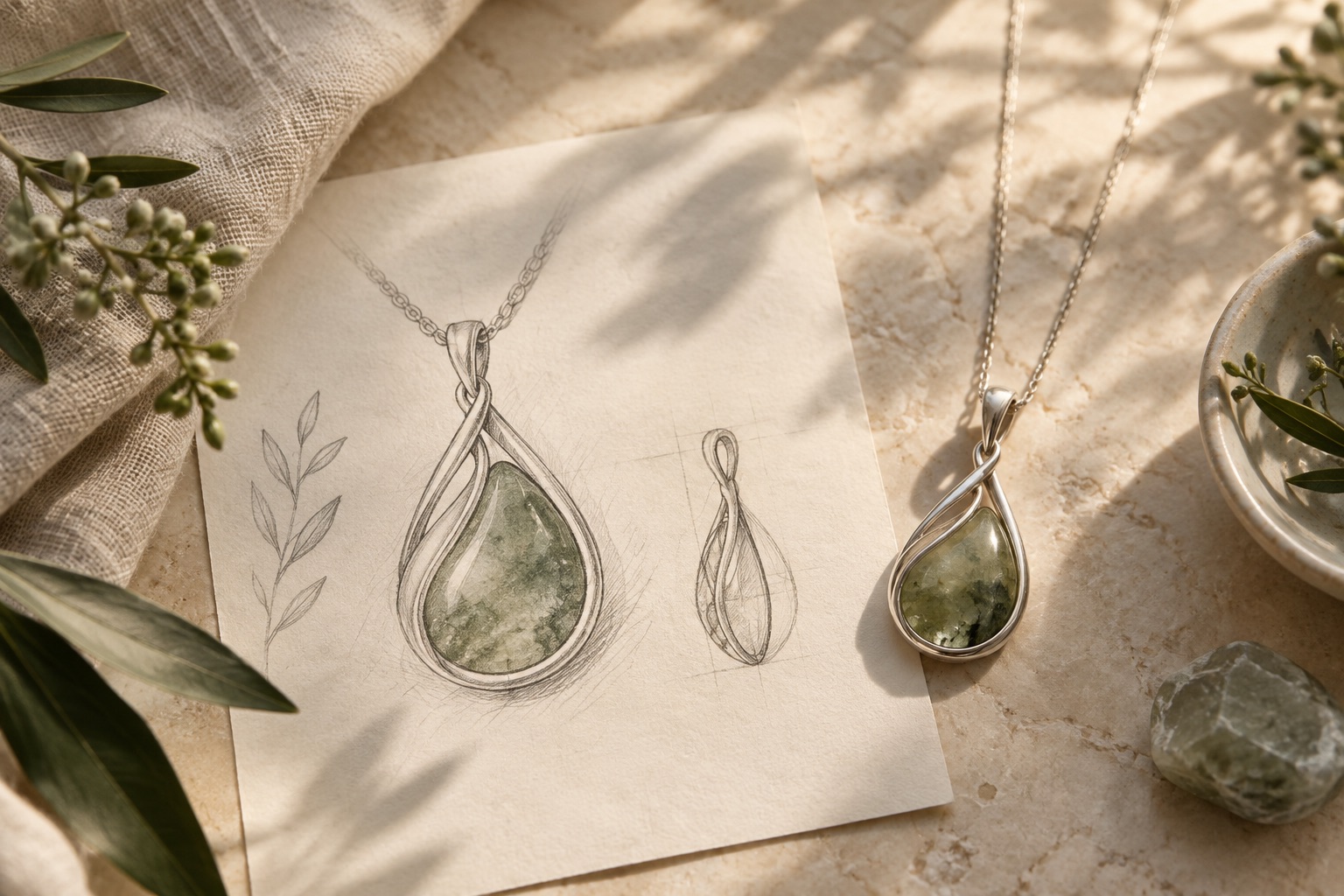
Find out what the maker can show before production and what will emerge during making. A drawing may demonstrate layout without predicting an inclusion pattern exactly. Agree the points at which you approve the design, any changes and the supply of personal materials.
Build a concise commission brief
Your brief can be simple: the memory, source, wearable format, size, essential details, material preference and budget. Add any care needs that would affect your decision. If the remembrance method is still uncertain, compare the main options before asking a maker to develop a complex design.
Questions you might have
Can ashes and handwriting be combined?
Sometimes, depending on the design and methods. Ask for a feasibility assessment and a layout showing how the elements share the available space.
Can an existing heirloom be adapted?
Possibly, but its condition and construction need assessment. Discuss risks and alternatives before agreeing to any irreversible work.
What should I expect to approve before making starts?
Ask about the layout, materials, dimensions, wording, costs and handling arrangements. Clarify which features a proof can represent and which cannot be exact in advance.