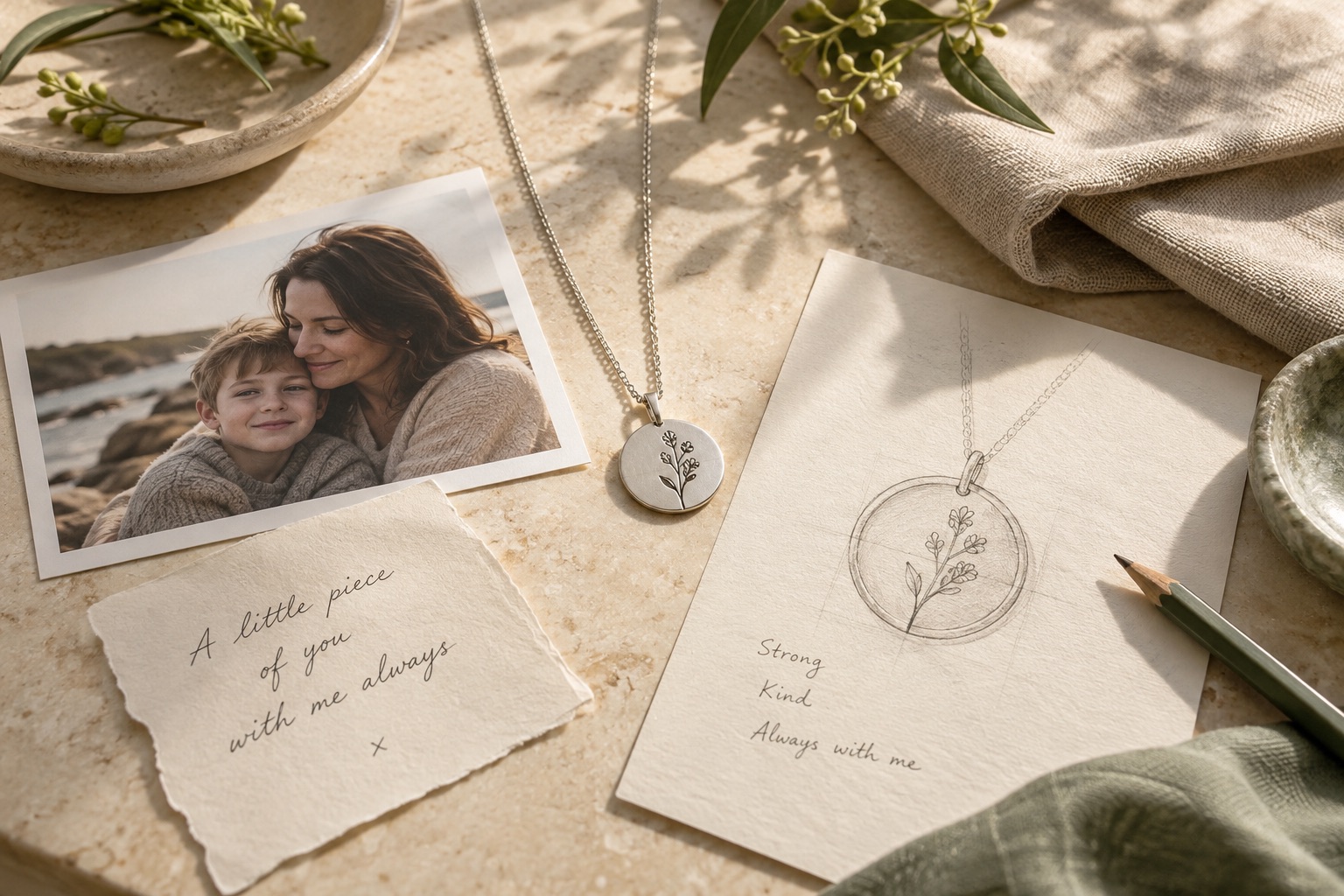
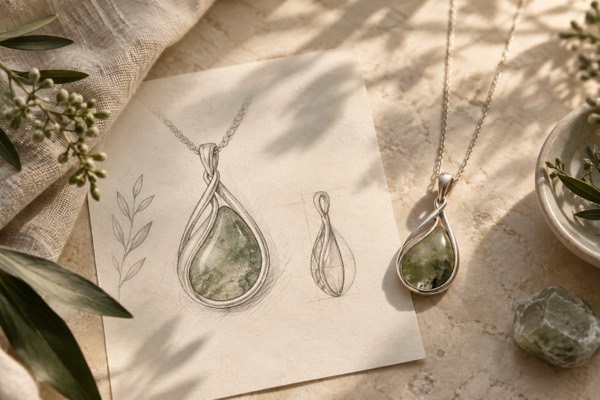
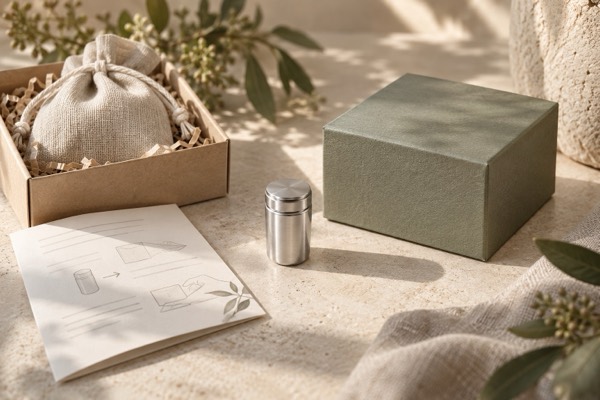

Start with the source and your idea
Describe what you have: ashes, a print, a handwritten phrase, a photograph or a personal idea. Explain what you want to preserve and any practical requirements such as ring size or a material preference. Ask for source assessment before sending something irreplaceable or committing to a design.
Shape the design with a maker
A maker can discuss which details fit the surface and method. Separate essentials from preferences so you can consider alternatives without losing the meaning. For a more involved design, ask how sketches, proofs and approvals work and what each stage will cost.
Prepare ashes or personal records
Obtain specific instructions for any material you need to supply. Ashes require an agreed quantity and handling arrangement; documents may be assessed from copies. Do not assume originals are needed or use a generic packing method without checking the maker and delivery requirements.
Agree the quote and approval points
A written quote should identify the piece, materials, personalisation and delivery included. Clarify the expected timetable, when it starts, what changes are possible and the provider’s cancellation terms. Ask how personal materials are identified and what happens to anything unused; do not rely on assumptions from another supplier.
Keep a record of the agreement
Keep source copies, correspondence and the approved proof together. When the piece arrives, retain its material details and care instructions too. These records can help if you later need repair or resizing, and they preserve the decisions that were made about a very personal object.
Questions you might have
Do I need a finished design before making an enquiry?
No. A memory, source and preferred format are enough to begin a feasibility discussion. A final design can develop after the method is understood.
When should I send ashes or originals?
Only after the maker has confirmed what is needed and how to supply it. Begin with copies for assessment where possible.
What should a written quote explain?
It should explain the design, materials, included work, delivery, approval stages and relevant terms, along with handling arrangements for personal material.