Choose the details that matter
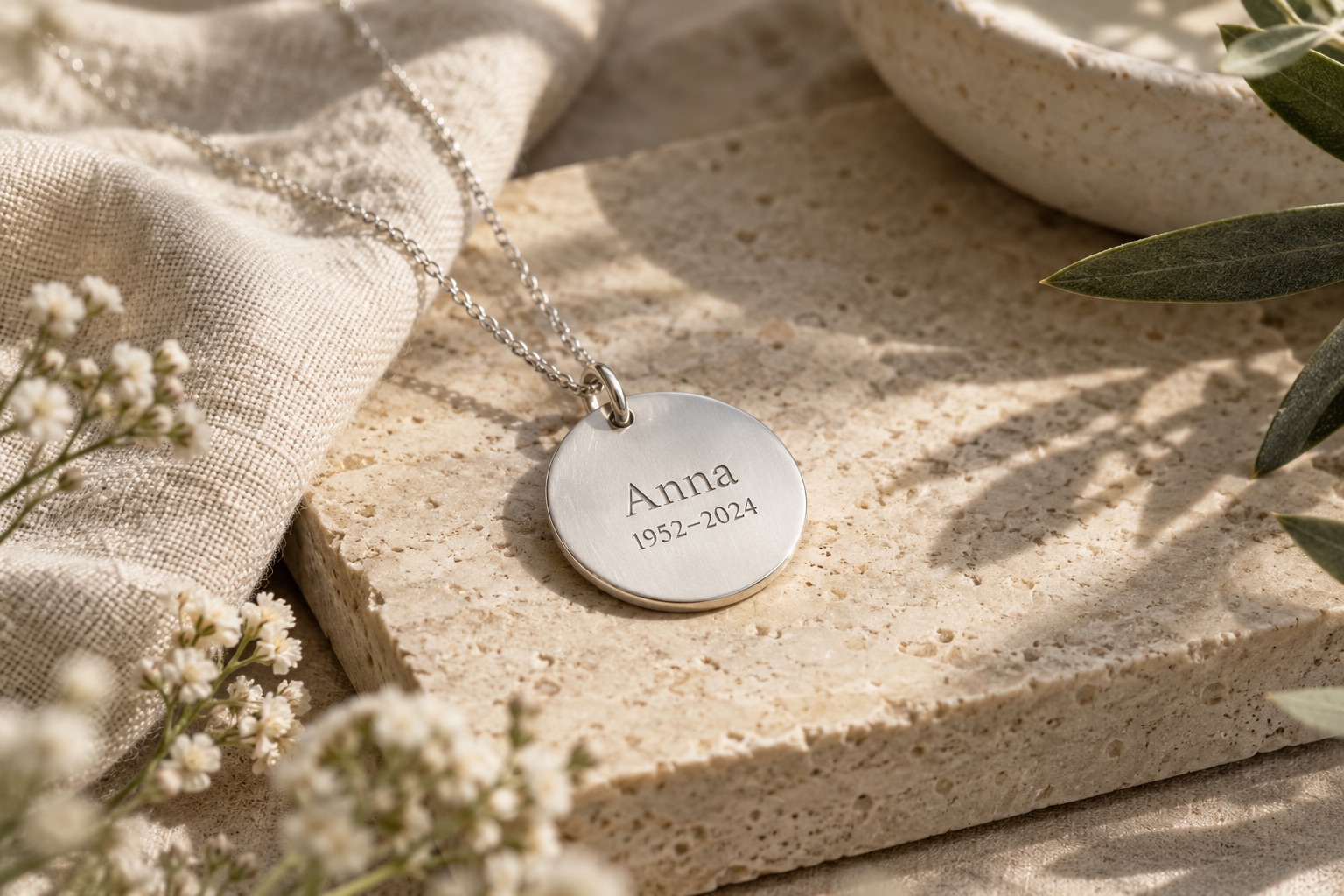
A first name, initial or family nickname may be enough. Dates can mark a birth, a shared occasion or another moment that matters to you. There is no requirement to include a date of death or a conventional memorial phrase if that does not suit the way you want to remember.
Make the inscription readable
Choose a layout that leaves the words room to breathe. A short inscription can be more readable than a crowded one, particularly on a curved or small surface. Ask about the font, placement and finished scale, and decide whether the inscription should be visible or kept on the reverse.
Check every character
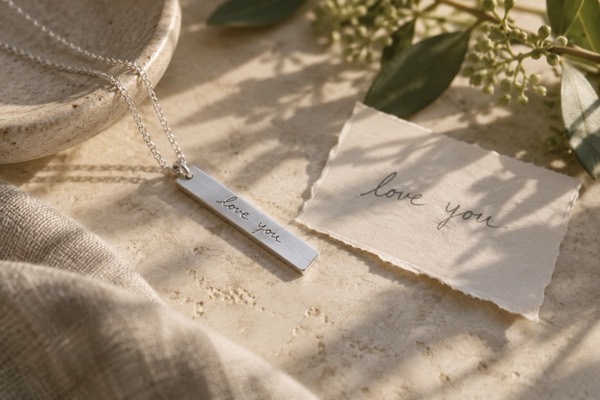
Write the text exactly as it should appear, including capitals, accents and punctuation. Check dates in an unambiguous format and compare the proof with your supplied wording. A name engraved in a standard font is different from handwriting reproduction, which uses an image of the person’s actual writing.
Combine text with another feature
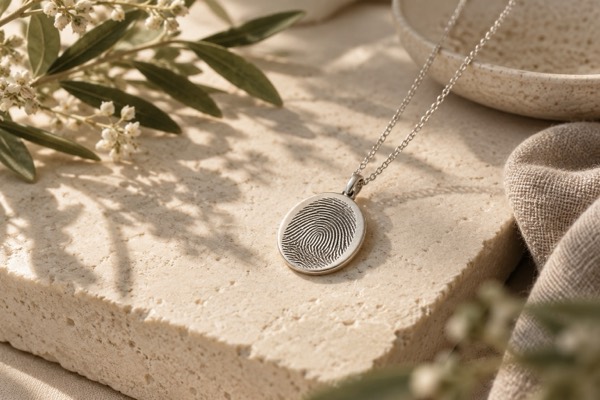
Text can sit beside a fingerprint, birthstone or another memorial feature where space allows. Establish which element has priority and consider placing the inscription on a separate surface. Approve the whole layout together so neither the image nor the wording is unexpectedly reduced to make room.
Prepare an exact inscription brief
Prepare a short brief with the exact inscription, preferred position and any essential symbols. Ask what the quote includes and how changes are handled after approval. If several elements are involved, a bespoke discussion can help establish a balanced design before anything is engraved.
Questions you might have
Do I have to include a date of death?
No. You can use another meaningful date or no date at all. The inscription should reflect the connection you want to keep.
Can I use a nickname or initials?
Yes, if the design has suitable space. Supply the exact wording and spelling rather than expecting the maker to infer a familiar name.
Can the inscription be hidden on the reverse?
Potentially. Check the reverse surface, attachment and comfort, and ask to see the intended placement in the proof.