How a ring can contain ashes
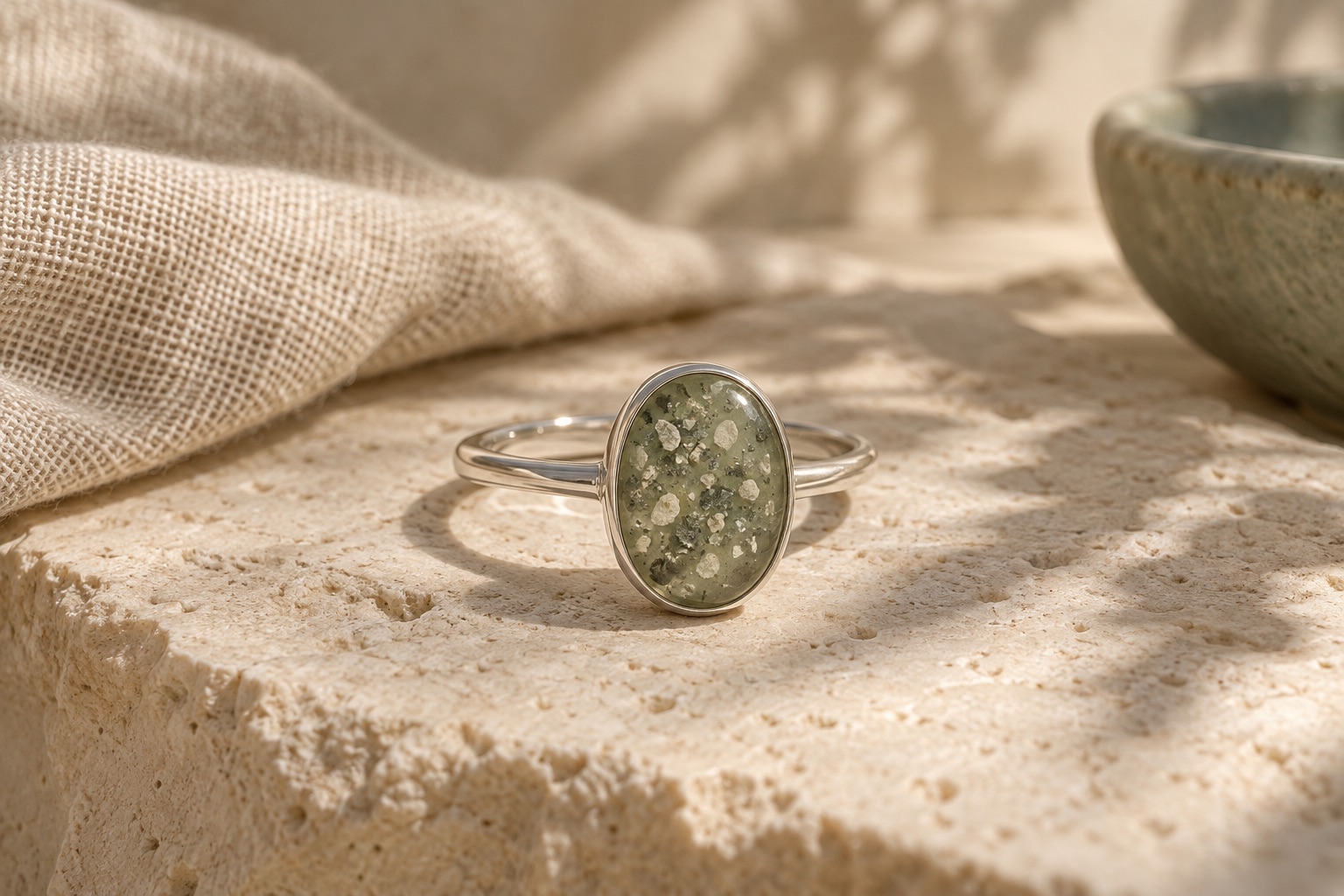
Some ashes rings contain an incorporated feature; others may use a compartment, where offered by a maker. Ask where the ashes sit and how that part is protected. Photographs alone may not show whether a design is raised, open at the back or intended to be sealed.
A setting that suits your hands
A low setting may feel different from a prominent feature, especially when dressing or working with your hands. Consider band width, edges and contact with neighbouring rings. Explain your usual activities to the maker so you can discuss care requirements before deciding that a design suits everyday wear.
Get the size right before making
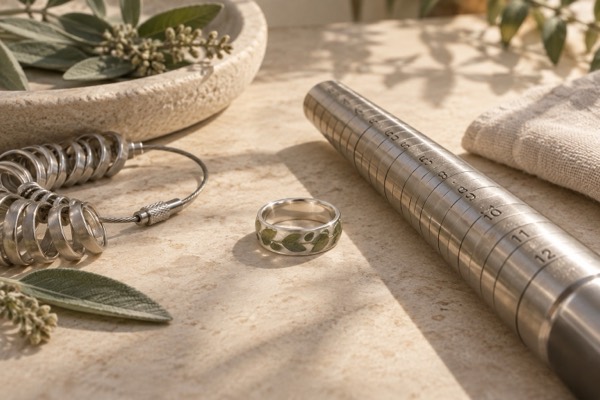
Confirm your size using a method the maker accepts. Band width and profile can affect how a ring feels, so an old size is not always enough. Ask about future resizing before manufacture: material, engraving and the position of an ashes feature can affect what alterations are feasible.
Commissioning and caring for the ring
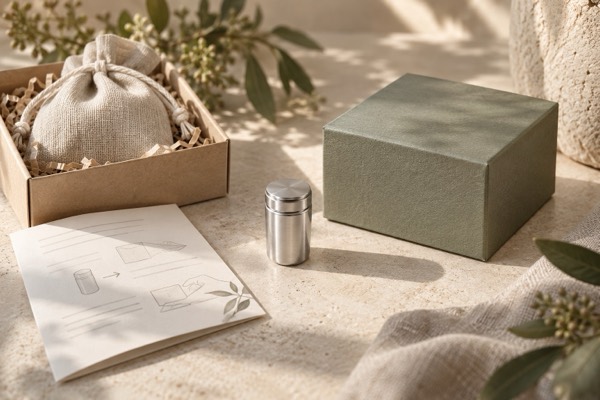
Agree the design and handling arrangements before sending ashes. Keep the approved details and care instructions with your records. Ask when the ring should be removed and how to clean around the memorial feature; advice for a plain metal band may not suit a ring containing other materials.
Consider a ring without ashes
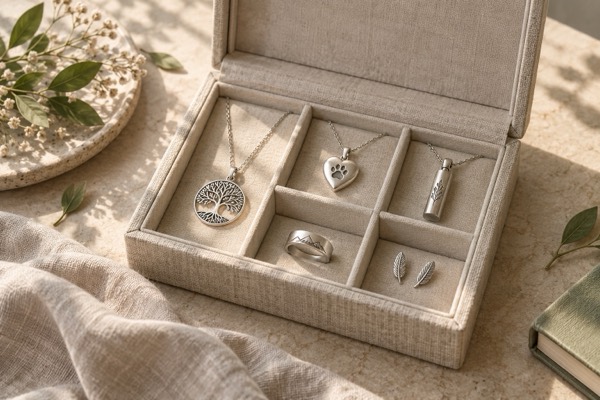
If you like the symbolism of a ring but do not want to use ashes, a fingerprint can preserve a recognisable personal mark. An inscription or meaningful stone offers another route. Compare what the ring will preserve as well as what it will look like on your hand.
Questions you might have
Can an ashes ring be resized later?
Sometimes, but not always. Construction, materials and the position of the memorial feature determine feasibility. Obtain an assessment before any alteration.
Can the ashes be discreet within the setting?
Potentially. Visibility depends on the setting and incorporation method. Explain your preference and ask to see relevant examples.
Should I remove the ring for particular activities?
Follow the maker’s instructions for the particular materials and setting. Discuss handwashing, work, exercise and household tasks before choosing the design.