Secure the keepsake and stop wearing it if unsafe
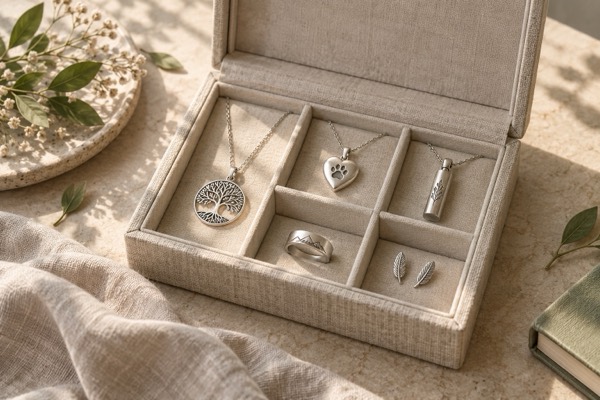
Stop wearing it if a setting, fitting or closure is loose. Keep the piece and any detached parts together in a secure container. Avoid glue, heat, force or opening an ashes chamber: a quick intervention can affect both the memorial material and the options a specialist later has.
Identify what has failed
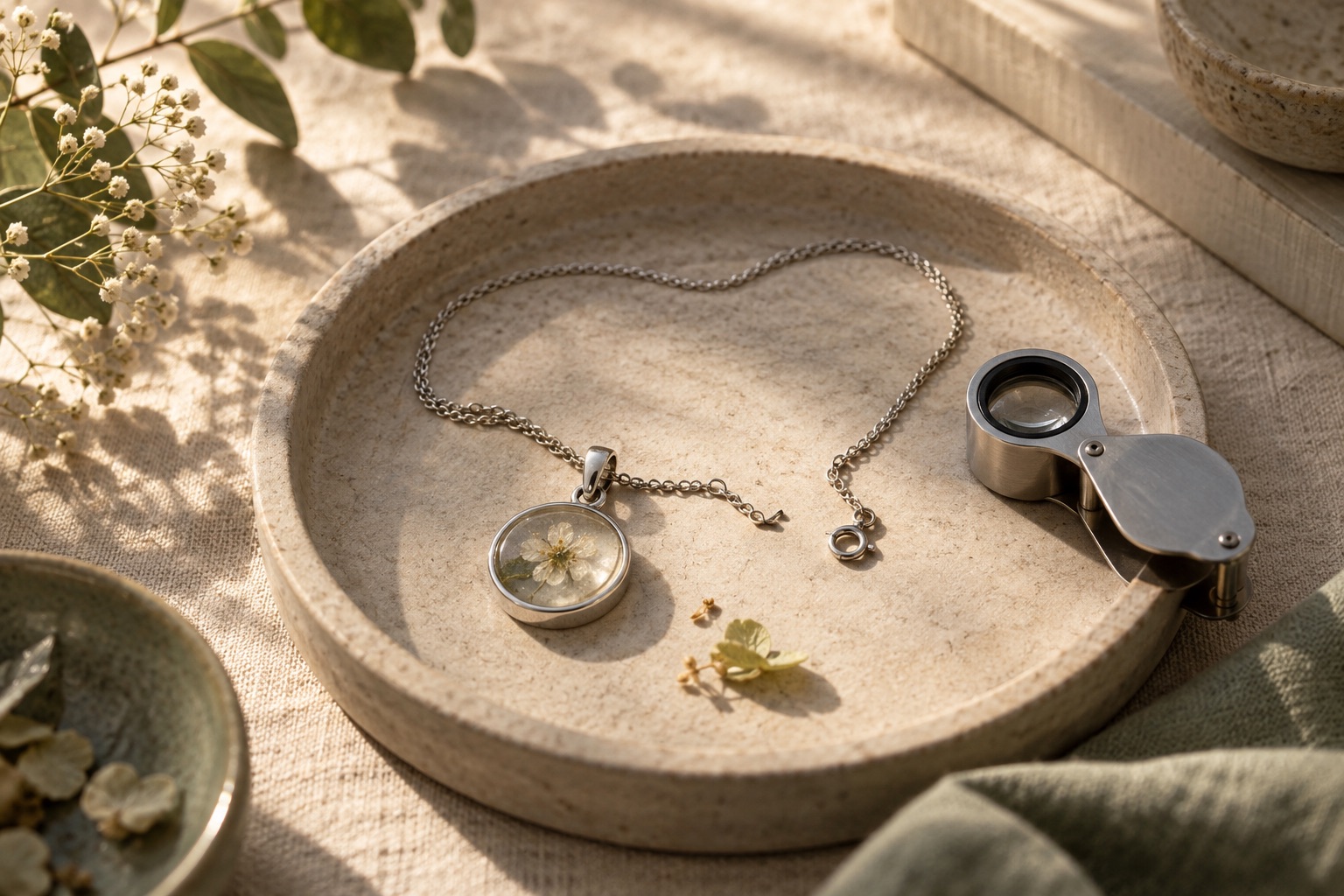
Note whether the problem is with the chain, clasp, metalwork, inclusion or surface image. Take clear photographs without taking the piece apart. Describe what happened and any treatments already used. These observations help a maker assess the issue without requiring you to diagnose it yourself.
Contact the original maker when possible
The original maker may know the materials and process, so contact them first where possible. If they are unavailable, look for a jeweller with relevant experience and provide the original records. A repairer should understand the memorial feature before agreeing work near it.
Understand the assessment and agreement
Ask what can be assessed from photographs and whether a physical inspection is needed. A written proposal should explain the scope, cost and risks to personal elements, including what may not be recoverable. Repair, remaking and replacement are different possibilities; none should be assumed before inspection.
Plan care after assessment
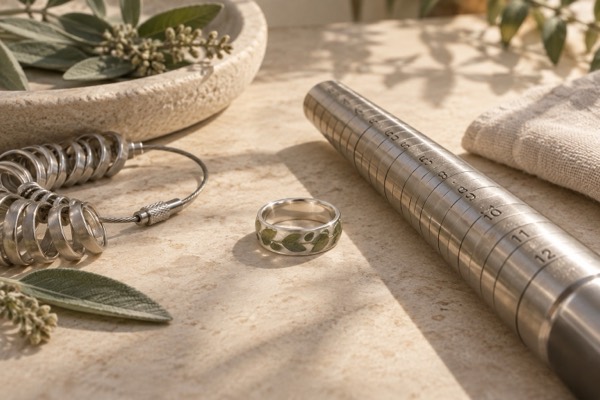
After an assessment, keep any revised care instructions with the original records. If the actual problem is a ring’s fit rather than damage, use a resizing discussion instead. Ongoing cleaning or wear advice should reflect the repaired construction, especially if a fitting or material has changed.
Questions you might have
Can damaged ashes jewellery always be repaired?
No. Damage, construction and material condition determine what is possible. Ask for an assessment without assuming the inclusion can always be restored.
Should I use a local jeweller or the original maker?
Start with the original maker where possible. If using another jeweller, confirm relevant experience and provide the memorial feature’s construction details.
What if part of the personal inclusion is loose?
Stop wearing the piece, keep detached material securely together and contact the maker. Do not attempt to reseal or glue it without appropriate instructions.
What information should I provide for a quote?
Provide photographs, material and maker details, a description of the problem and any previous treatment. Ask what further inspection is needed.
Further reading and source guidance
- GIA: caring for jewellery ↗
General material and cleaning guidance; follow the instructions for your complete keepsake.
Source guidance reviewed 10 October 2026.