A likeness or a personal association
A photographic design depicts someone directly. A symbolic design represents an association that you understand: a stone, a shape or a reminder of something shared. Start by deciding which of those experiences you want when you look at the jewellery.
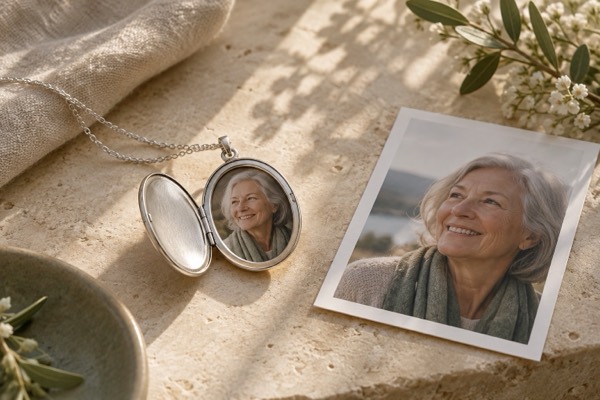
Keep a photograph close
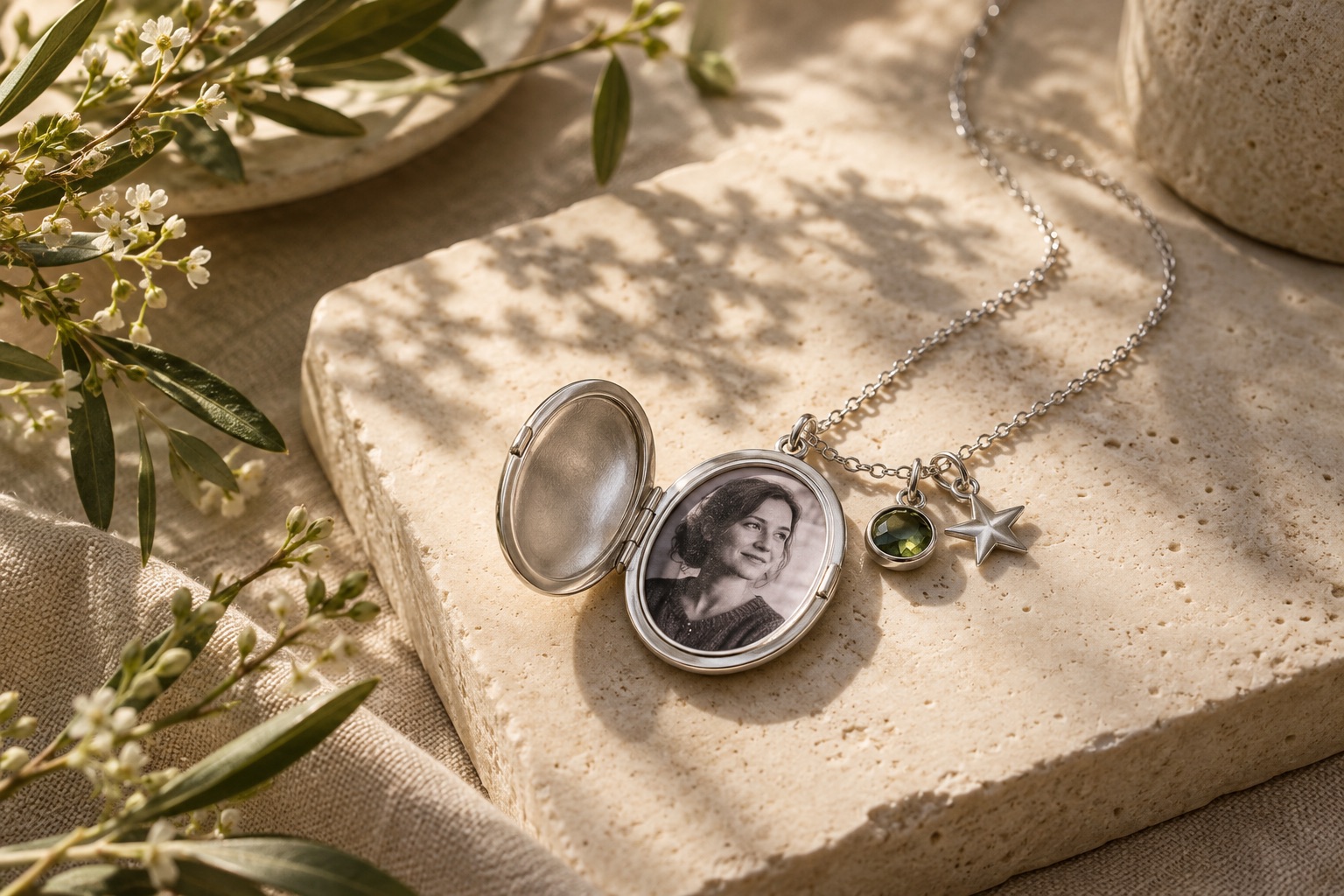
A locket holds an image, while other designs reproduce a photograph on a surface. An engraved likeness will not look the same as a printed colour image. Choose the approach before assessing the photograph, because the source requirements and finished appearance differ.
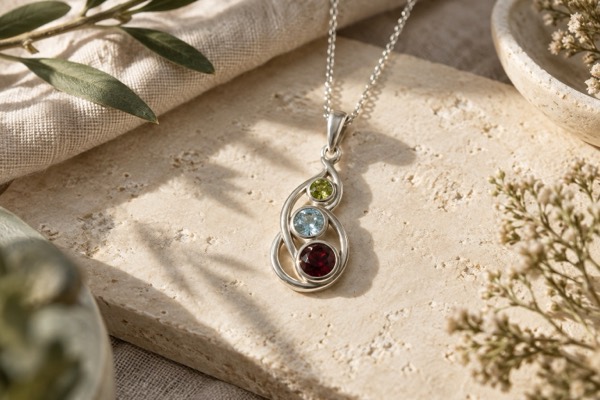
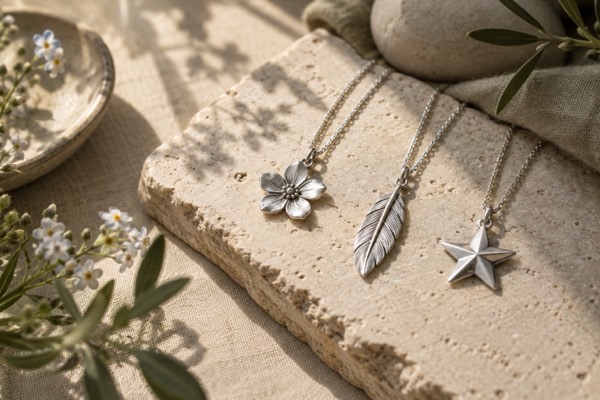
A meaningful stone or symbol
A birthstone can connect a colour or month to the person you remember. A motif may recall a shared activity or belief. You do not need a universally recognised memorial symbol; a private association can make an otherwise ordinary design deeply personal.
Match the idea to the source
If using a photograph, protect the original and ask about clarity, cropping and the size of the reproduced face. A symbol-based idea may need only a description or sketch. Neither route should begin with a promise that every detail can fit into a small piece of jewellery.
Choose a design direction
Choose the main visual idea before adding inscriptions or other elements. If you cannot find a shape that conveys the memory, explain the association in a bespoke brief. If the strongest connection is a phrase or signature, explore words and handwriting instead.
Questions you might have
Do symbolic keepsakes require physical material?
No. A symbol can be chosen for its personal association without ashes, prints or any other physical source.
Can a photo and stone be combined?
Possibly, depending on the design and space. Ask for a combined layout rather than choosing each element in isolation.
Does a memorial symbol have to be religious?
No. Symbols can be religious, secular or entirely personal. The meaning does not need to be obvious to anyone else.